Team
Operators, genomics and cancer biology.
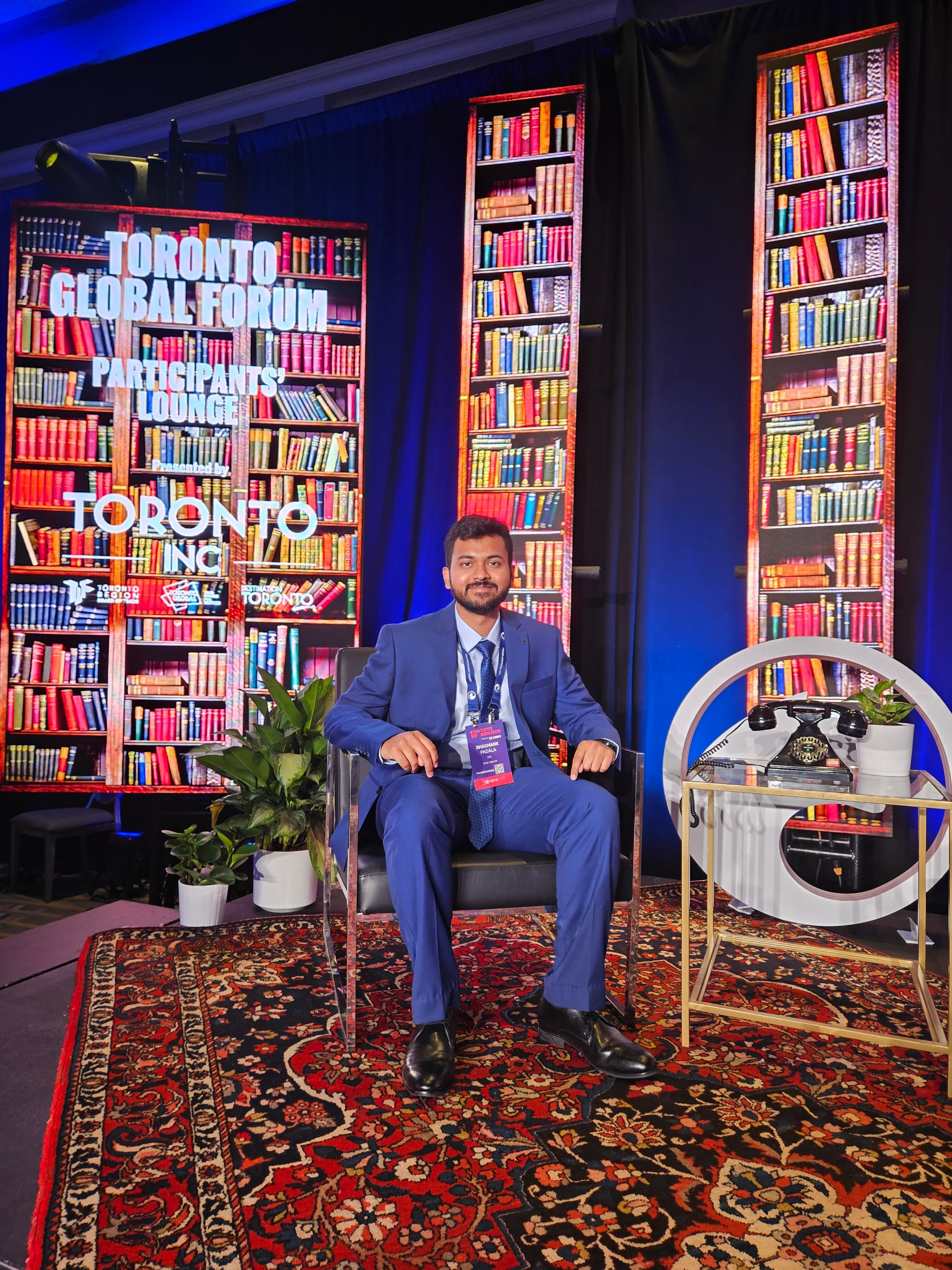
Founder. AI Engineering & Product Leader
Shashank Padala
AI product leader and operator, previously at Amazon and Tesco PLC, and founder of Kirak Labs, a Toronto AI product studio. Brings an operations and AI engineering perspective to making personalized cancer immunotherapy cheaper, faster and more accessible. Independently built the award-winning Project Rosie prototype, then brought together researchers in cancer genomics and biology to strengthen it.
Leads N1 Therapeutics’ product vision, roadmap and strategy, bringing together the team, capital and partnerships needed to advance the programme.
Why this problem
Working across retail operations at Tesco and enterprise transformation and AI at Amazon shaped how Shashank approaches this problem: follow the whole workflow, find the bottlenecks and connect the people and infrastructure needed to remove them. Personalized vaccines require that coordination across sequencing, computational design, biological validation, manufacturing and the clinic. His focus is reducing the cost and delays across that journey so more patients can access it.
He independently built the original Project Rosie computational prototype for personalized neoantigen vaccine design, which won the Health & Sciences Prize in Google’s Gemma 4 Good Challenge. He then brought in researchers with cancer-genomics and computational-biology expertise to challenge its assumptions, iterate on the pipeline and make its evaluation more rigorous. That is the next step toward a robust, validated workflow.
Enterprise operations & AI · Amazon
Led platform consolidation, vendor migration and operational efficiency programmes as a Technical Program Manager II. Led an engineering team integrating generative AI into enterprise content workflows, with product vision, roadmap, strategy and adoption guiding the rollout.
Retail operations & financial compliance · Tesco PLC
Worked across software engineering and technical programme management to streamline retail operations and customer fulfilment. Designed and rolled out a personalized picking-performance tool across more than 3,000 stores, and led GDPR compliance across more than 120 financial systems through coordination with finance, technology, legal and external vendors.
AI product studio · Kirak Labs
Founded a Toronto AI product studio and built multiple products, leading product vision, roadmap and strategy alongside hands-on development. Built the original Project Rosie prototype, recognized with the Health & Sciences Prize in Google’s Gemma 4 Good Challenge.
Education
- Master’s in Management, Innovation and Entrepreneurship · Queen’s University, Smith School of Business
- BTech, Electronics and Communication Engineering · IIT Guwahati
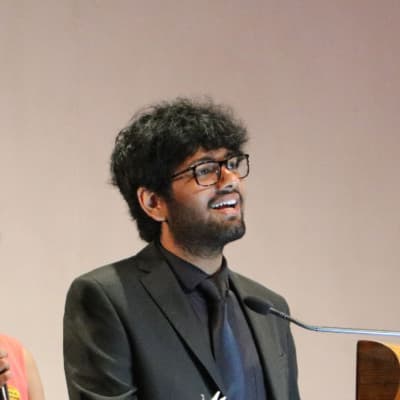
Founding team · Translational oncology
Abhishek Ajay
Computational leader in translational oncology at the Case Comprehensive Cancer Center. Leads multi-omics strategy and a team of PhD researchers studying small-cell lung cancer, spanning biomarker discovery, ctDNA monitoring and drug-target assessment. Connects rigorous statistical analysis with decisions researchers and physicians can act on.
Senior Research Associate at Case Western Reserve University’s Case Comprehensive Cancer Center. Brings experience connecting tumour biology, genomic infrastructure and clinical outcomes to N1 Therapeutics’ scientific evaluation and translational questions.
Computational leadership · Case Comprehensive Cancer Center
Leads computational strategy for a single-center small-cell lung cancer programme spanning more than 150 tissue-sequenced patients and approximately 200 patients with serial ctDNA data. Coordinates a team of one PhD scientist and two PhD students, translating multi-omic and clinical findings across research and clinical teams.
Biomarkers, treatment response & drug development
First author on two peer-reviewed oncology papers, including antibody-drug conjugate target assessment and longitudinal ctDNA kinetics, and co-first author on a small-cell lung cancer biomarker study. His work connects molecular profiles with patient outcomes and treatment response, including analyses of CDK4/6-inhibitor sensitivity across clinical samples and patient-derived xenograft models.
Genomics infrastructure & clinical decision support
Owns automated, versioned R/Bash pipelines integrating Tempus sequencing data across AWS S3 and more than 280 TB of HPC storage, with quality control and clinical dashboards. His analysis spans RNA-seq, whole-exome sequencing, whole-genome bisulfite sequencing, ctDNA and spatial transcriptomics. Advises wet-lab collaborators on sequencing depth and experiment design.
Clinical data science · Cleveland Clinic
Previously built statistical models and clinical-data pipelines at Cleveland Clinic to evaluate radiation-reduction interventions, improve clinical protocols and support regulatory reporting. Earlier research at Columbia University used electronic health records to predict patient deterioration and connect statistical findings with clinical outcomes.
Education
- MS, Biostatistics · Columbia University, Mailman School of Public Health
- BTech, Biotechnology · IIT Guwahati
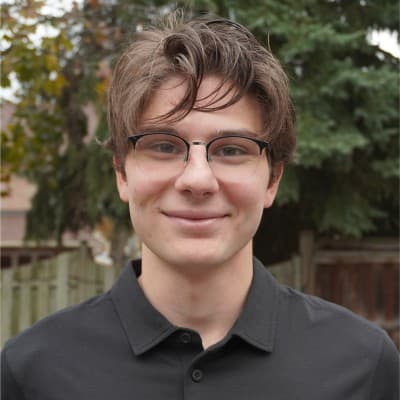
Founding team · Computational genomics
Alexander Turco
Brings computational cancer genomics, deep learning and scalable sequencing workflows to Neoantigen Retriever. Connects biological questions with reproducible computational analysis.
Doctoral researcher in Medical Biophysics at the University of Toronto and Princess Margaret Cancer Centre. His research studies repetitive DNA, genome instability and cancer.
Cancer genomics & deep learning
Built scalable workflows and deep-learning models for cancer and population-genomics data, with experience in third-generation long-read sequencing.
Research experience
Investigated sex differences in synthetic-lethal genetic interactions using cancer RNA-sequencing data. Earlier work used C++ and approximate Bayesian computation to study the evolution of protein low-complexity regions.
Education
- Doctoral research, Medical Biophysics · University of Toronto
- Biology Research Specialization · McMaster University
Our mission
Understand life from first principles.
Life is built from biological primitives and rules that we have only begun to understand. Our goal is to map them, model them, and eventually learn to program them.
We believe that understanding life from first principles can make disease tractable, extend healthy lifespan, and turn biological limits into engineering problems.
Where we begin
We’re starting with personalized cancer vaccines. We connect tumour sequencing, computational target selection, experimental validation, and mRNA delivery.